
Limited attention span
Sessions end early or need constant redirection, so fewer usable reps are ever completed.

NoPainHeals turns physiotherapy and occupational therapy exercises into interactive projection games. The clinical movement still happens — the child's attention is simply on the game, not the effort.
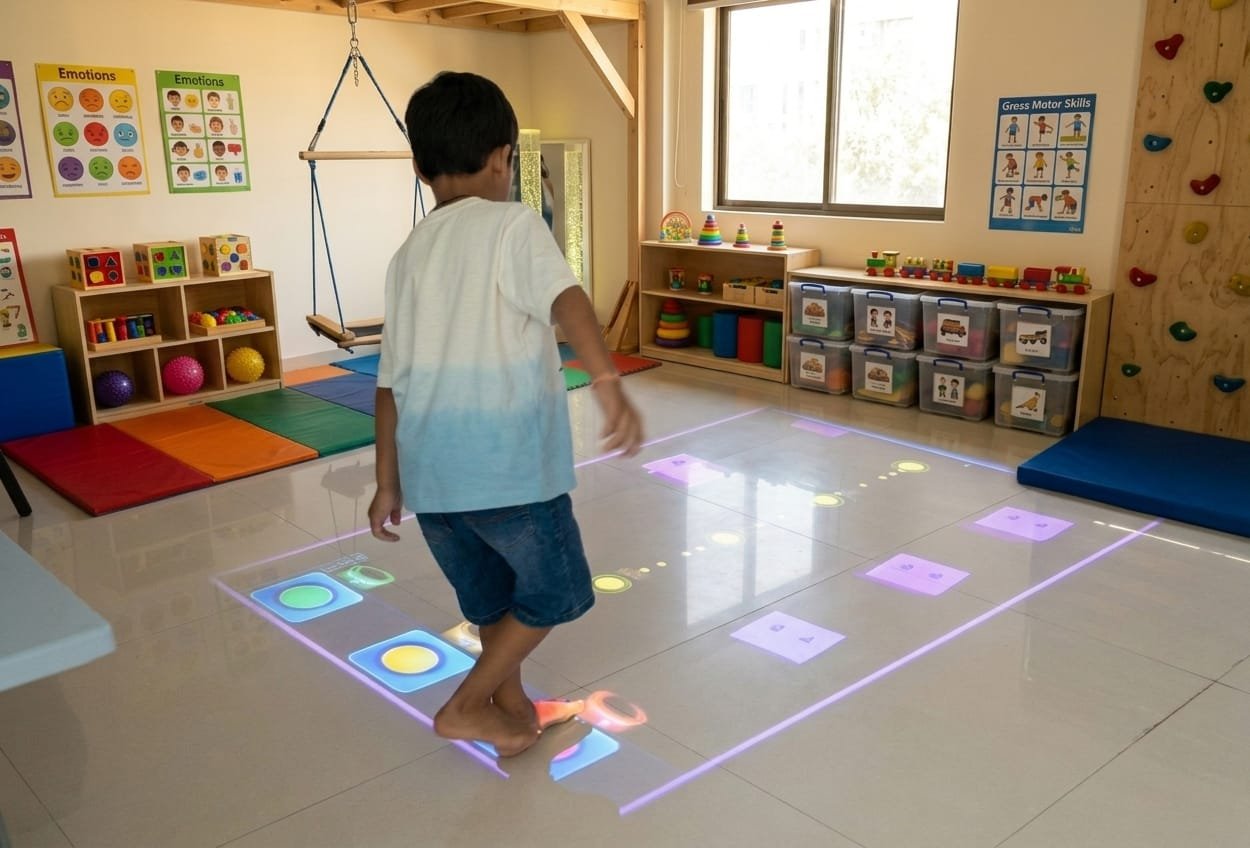
In session
Longer sessions.
More reps.
Less resistance.
Play. Heal. Grow.
8 therapy modules
Ask a child with autism or a sensory processing difference to repeat the same motion twenty times and the session rarely ends where it should. Four things get in the way — and each one costs clinical progress.
Sessions end early or need constant redirection, so fewer usable reps are ever completed.
Once a child links the therapy room with discomfort, every following session starts from resistance.
Bands, boards and worksheets were built for function, not fun. They ask a child to bring all the motivation.
Clipboard notes make it hard to adapt a plan, prove progress, or show parents what actually changed.
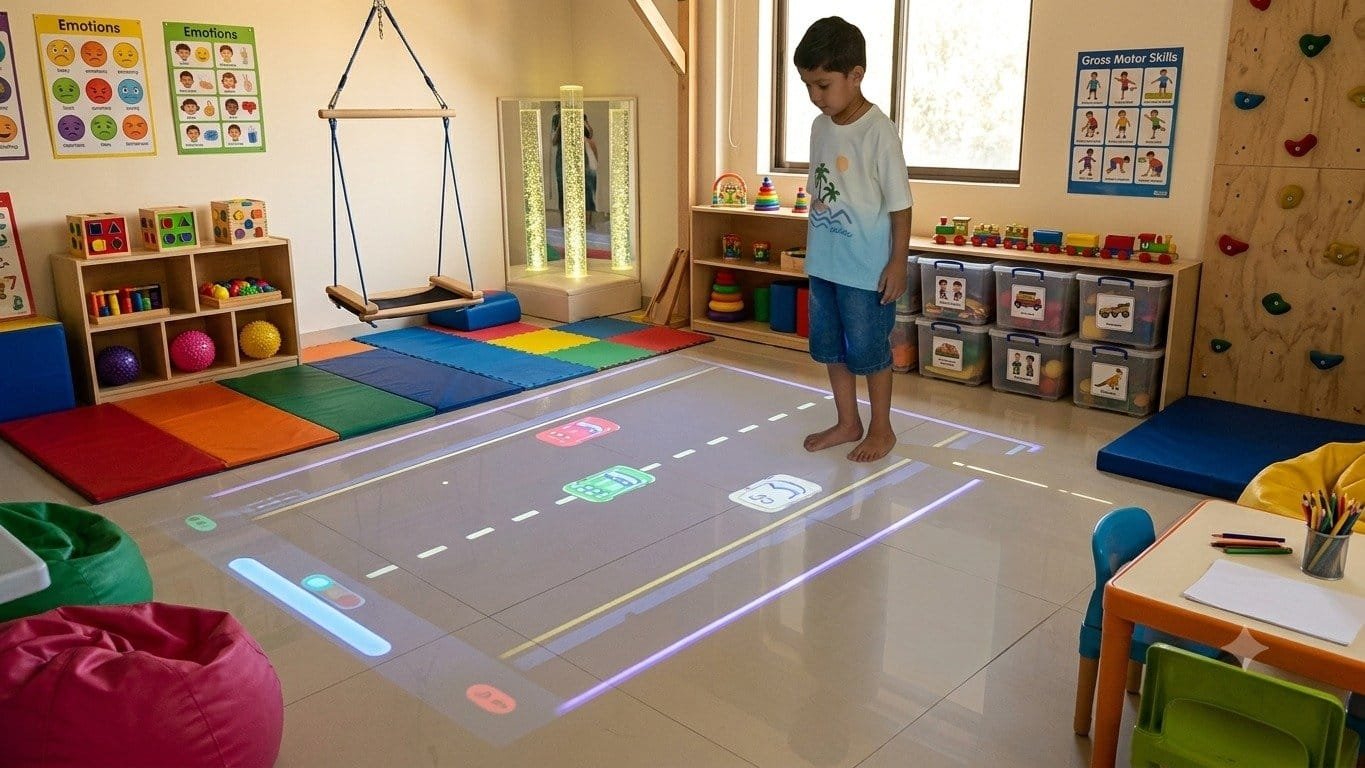
Live session
The child is balancing. They think they're driving.
NoPainHeals removes the willpower burden entirely. A projector turns a floor, a wall or a table into a responsive game space; sensors read the child's movement and the game answers instantly.
Because the next target keeps appearing, children keep going well past the point they would normally stop.
Target size, speed, range and duration adjust mid-session, so the challenge tracks the child, not a preset.
Attempts, accuracy and time-on-task are captured as the child plays — ready for parents and referrers.
Each activity targets a distinct therapeutic area — from postural control to articulation — and every one of them looks like a game to the child.
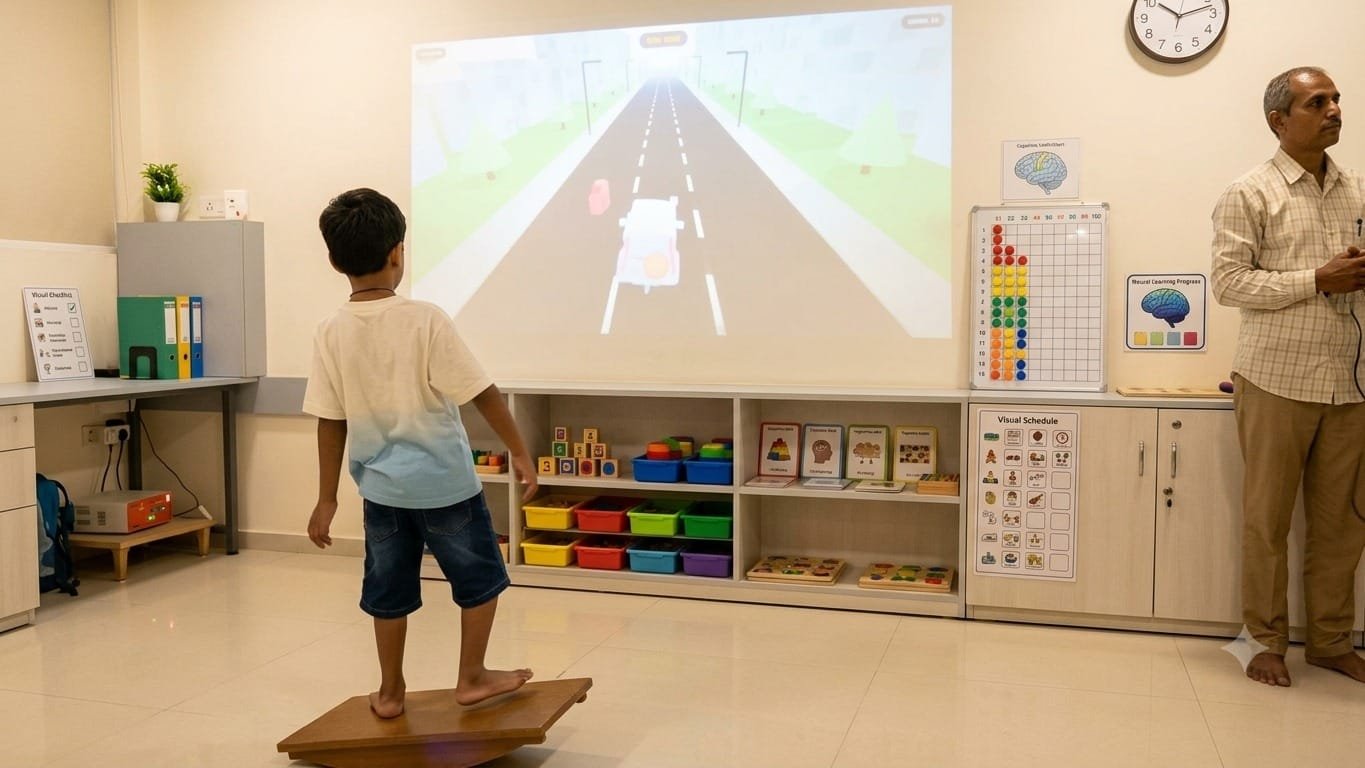
A tilting platform the child steers with their own weight. Core stability and postural control, disguised as a driving game.
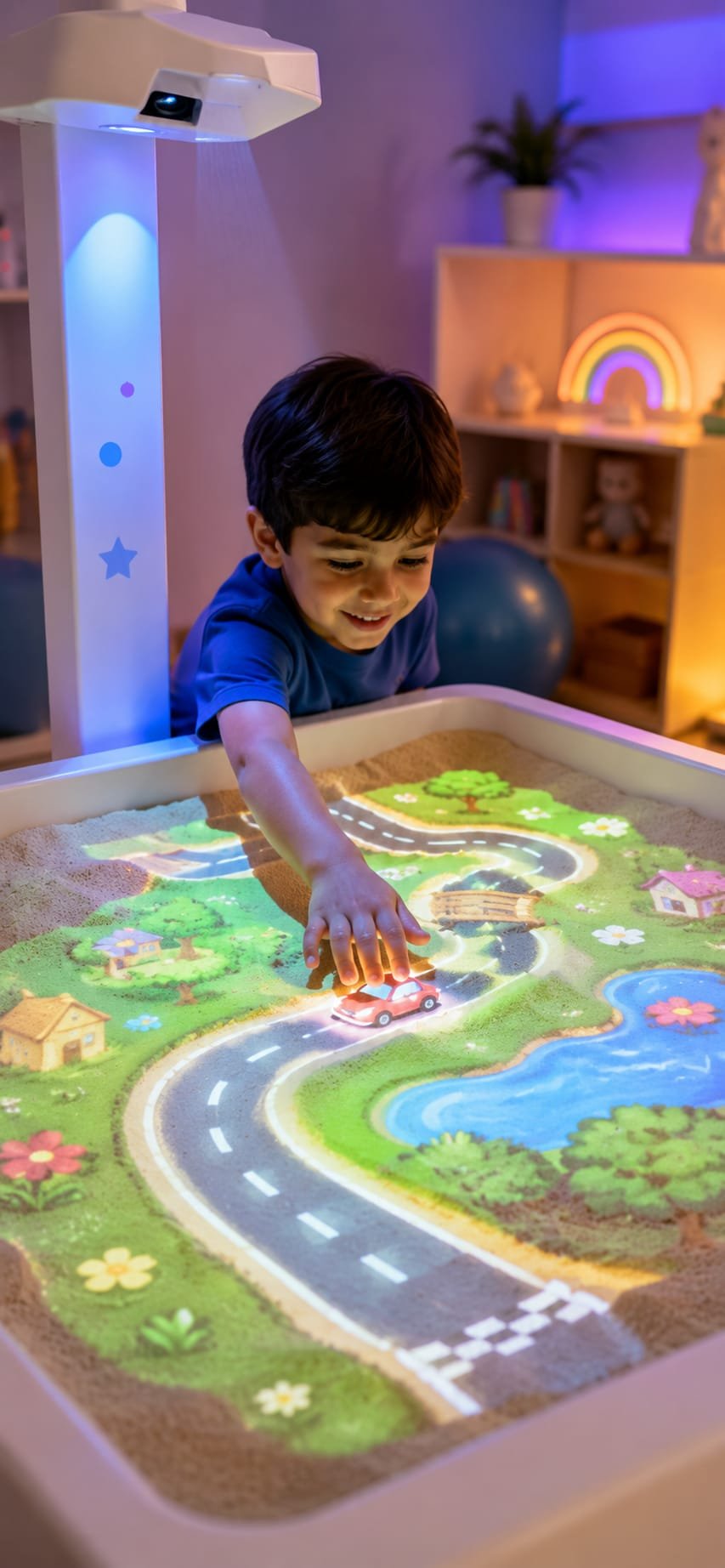
A tactile play space where textures invite exploration, calming touch responses and sustained hand engagement.
Light patterns underfoot prompt stepping, reaching and stomping — weight-shifting a static mat rarely achieves.
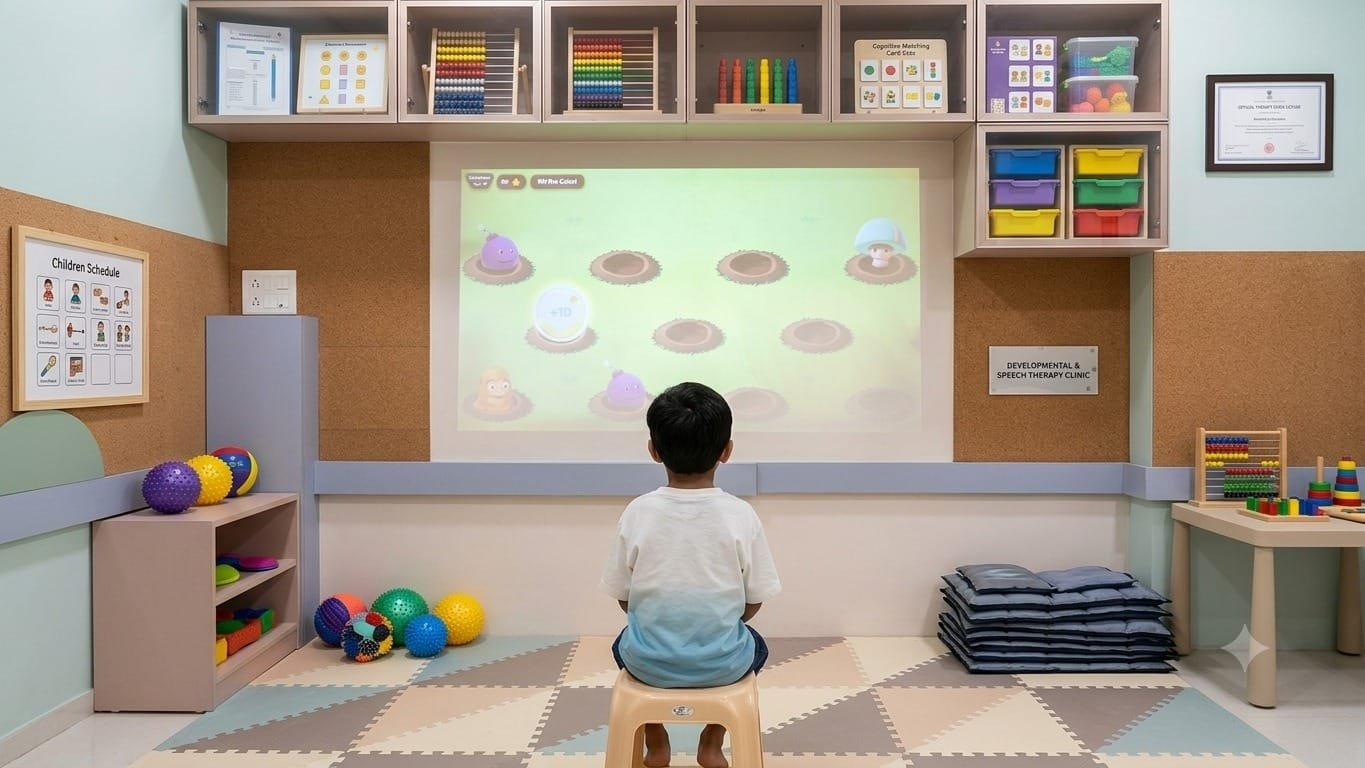
A vertical surface that answers touch and movement, drawing out reaching, stretching and shoulder mobility.
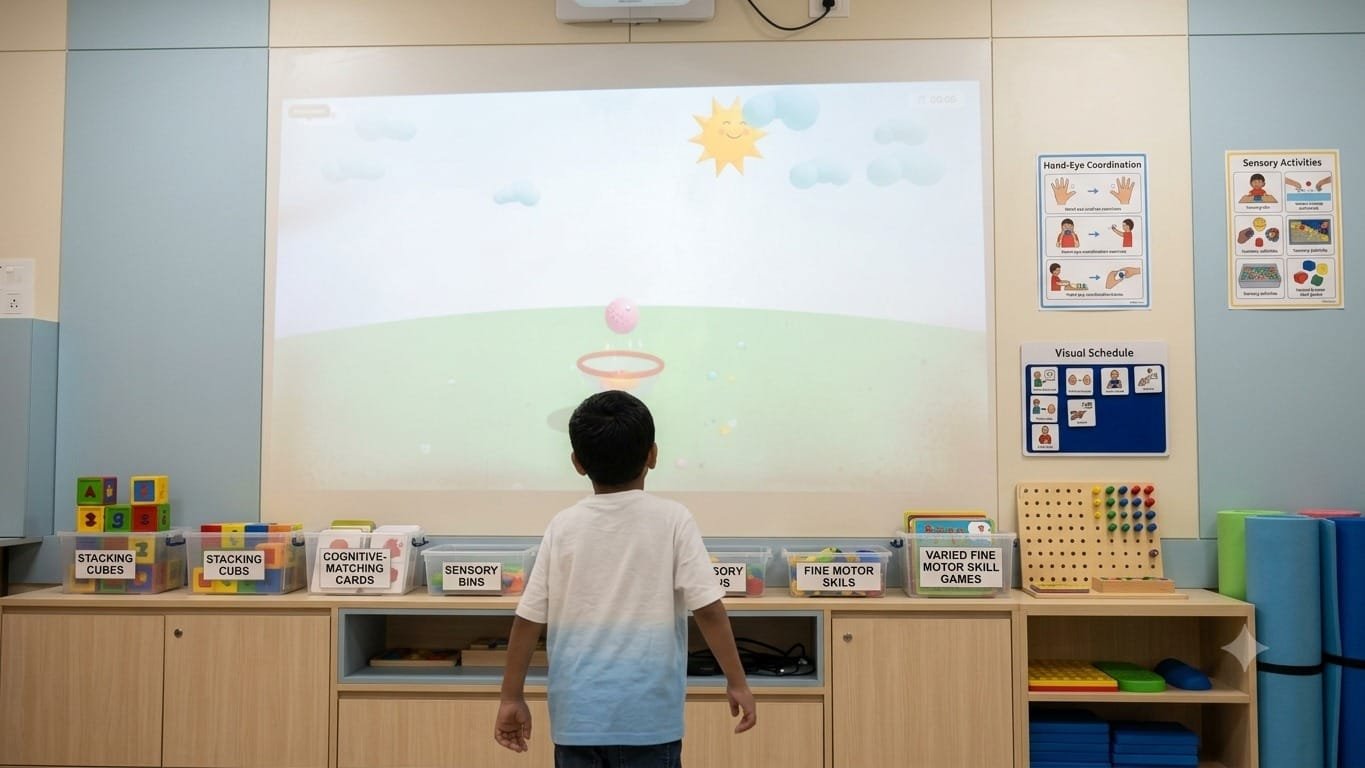
Motion sensing turns whole-body movement into gameplay — building coordination, range of motion and motor planning without a single counted rep.
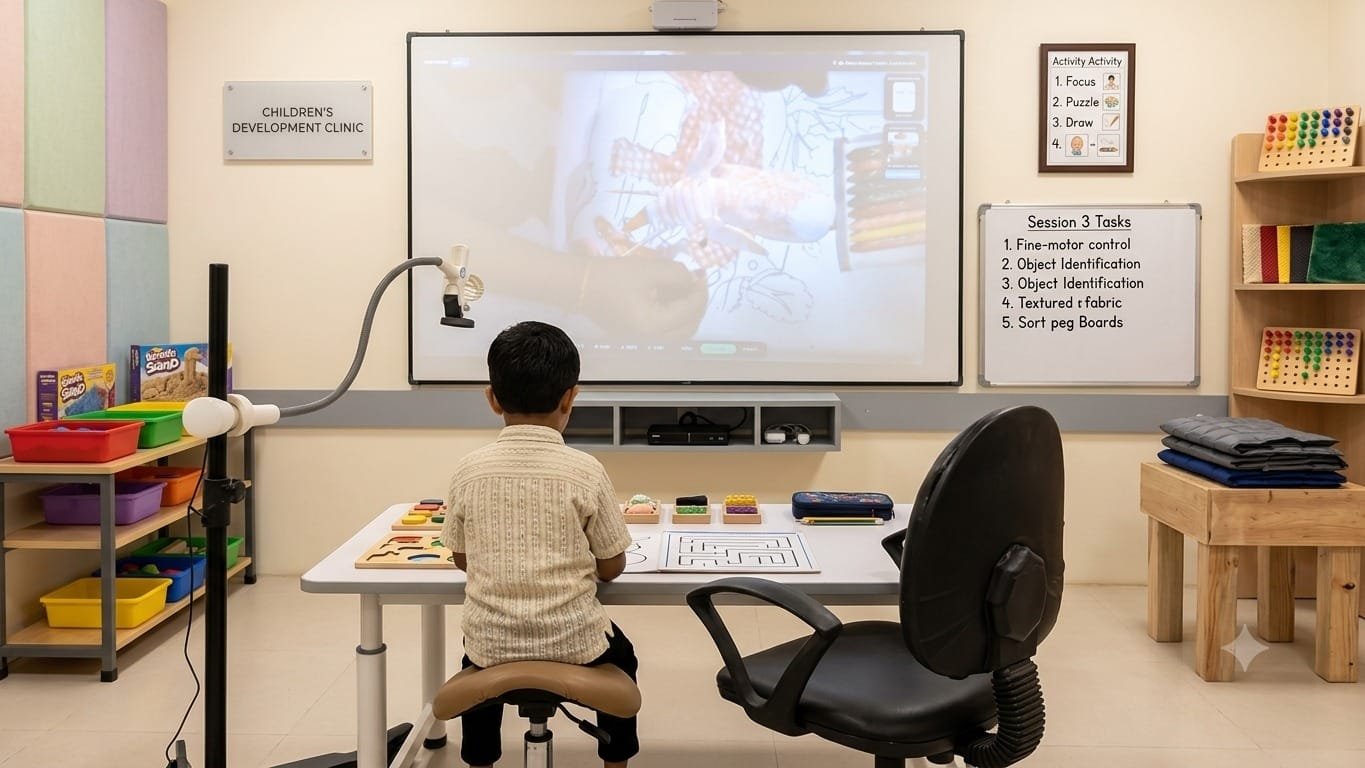
Guided colouring that strengthens grip, pencil control and hand–eye coordination in low-pressure practice.
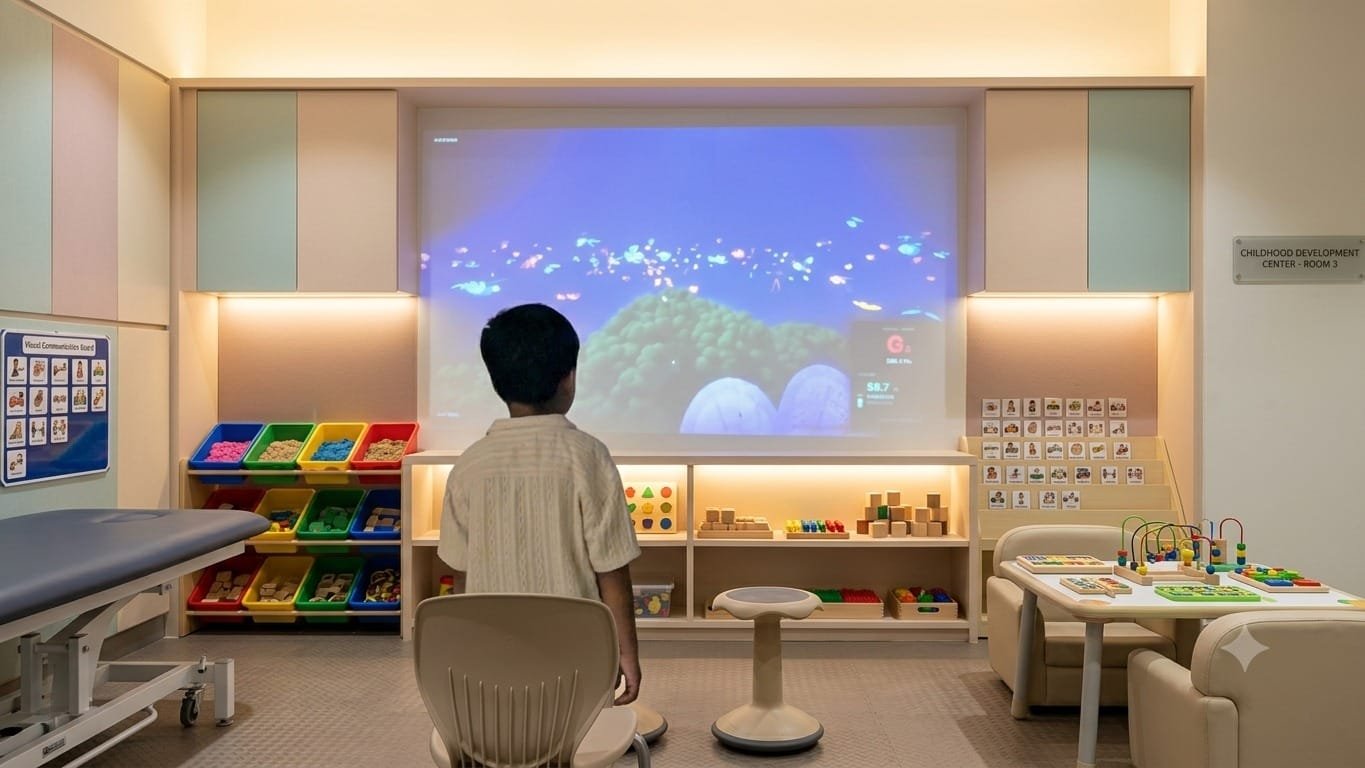
Voice-responsive games that encourage sound production, pacing and articulation — in English or the child's own language.
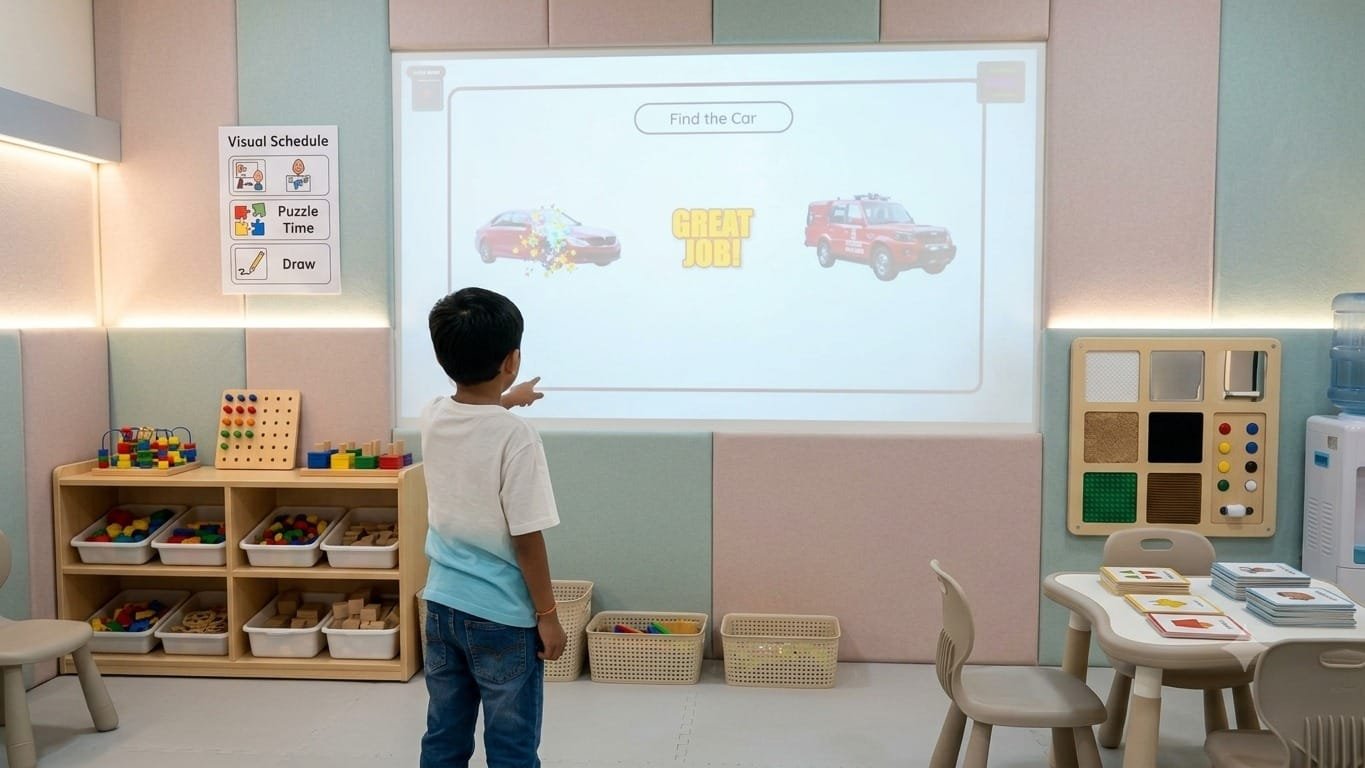
Attention, working memory and sequencing — the thinking skills underneath following an instruction and finishing a task.
NoPainHeals is a tool in the therapist's hands, not a replacement for one. Clinical judgement sets the goal; the system just makes the work worth doing.
The therapist selects the activity that matches the session objective — balance, reach, grip, articulation.
Target size, speed and range are tuned to the child in front of you, and adjusted again mid-session.
Sensors read movement and the game responds instantly. The therapeutic motion happens inside the play.
Attempts, accuracy and time-on-task are there at the end — no clipboard, no reconstructing the session.
Children finish sessions. Therapists spend their time on therapy instead of redirection. Parents finally see something concrete.
Therapy stops being the thing they dread. Engagement rises, resistance drops, confidence builds with each level cleared.
Less time spent coaxing, more spent treating. Difficulty adjusts on the fly and documentation arrives already written.
Session-by-session data instead of a verbal summary — and a child who walks out of the room in a better mood.
A visible differentiator at the door, stronger retention between visits, and evidence to show referrers.
Physiotherapy and occupational therapy practices looking to lift adherence, shorten the ramp-up at the start of each session, and stand apart locally.
Sensory rooms and therapy corners that need activities a small team can run with many children across a week, not one-to-one only.
Early-intervention and autism programmes that work to measurable developmental milestones and report to families and referrers.
Why a scoreboard and a goal change a child's willingness to repeat a movement — and the five therapy areas it works best in.
Read the article
Repetition, discomfort and no visible progress. A look at what actually drives resistance, and what reliably reduces it.
Read the articleWe will walk your team through the games, the hardware and the reporting — and show you exactly how NoPainHeals fits the room and the clinical goals you already work to.