

SandBox
A tactile play space where textures invite exploration — supporting sensory regulation and sustained hand engagement without the pressure of a set task.
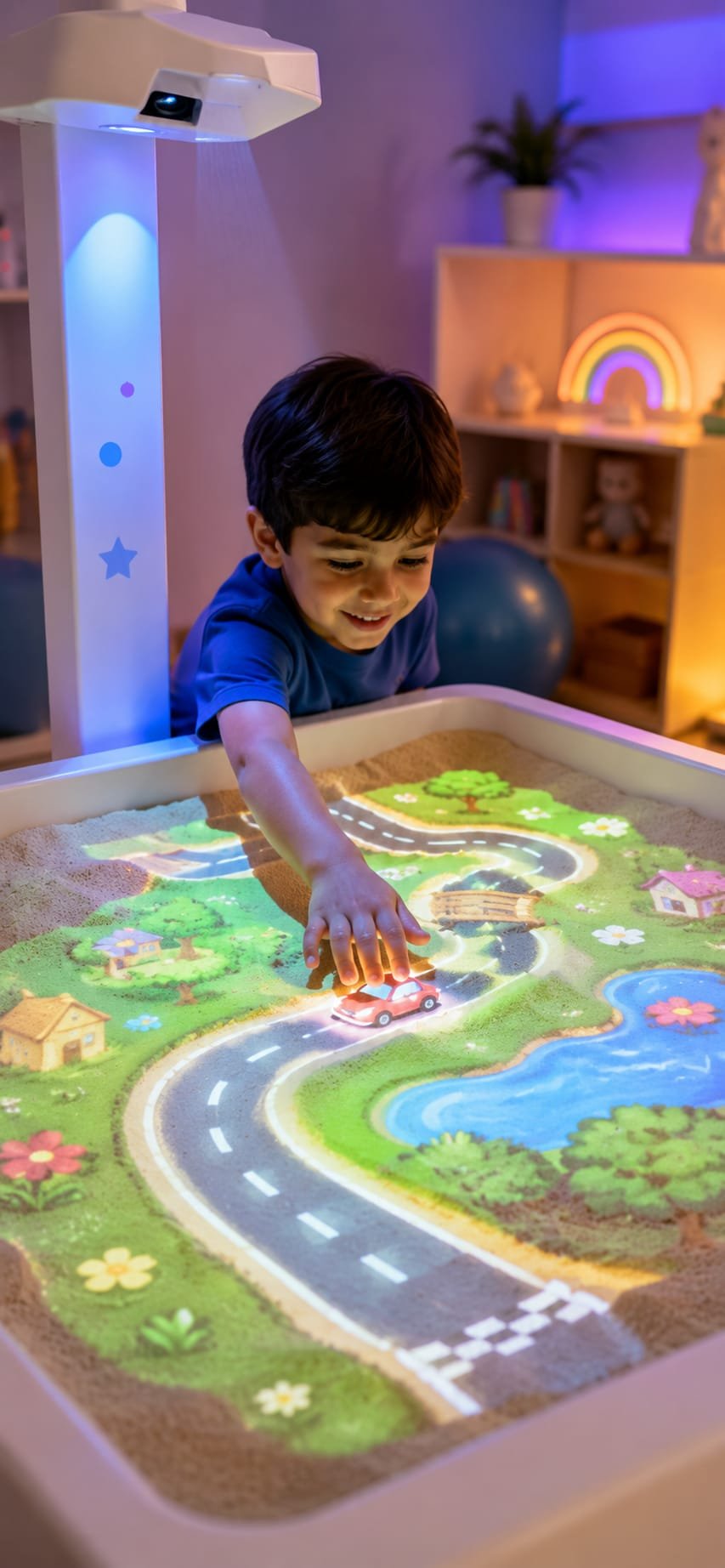
Build, dig, flatten, start again. Nothing to get wrong, which is the point.
What it is
The child works at a responsive surface that reacts to touch and to the shape of what they build. Pushing, scooping, flattening and tracing all change what appears, so the surface answers every hand movement immediately and visibly.
There is no score and no fail state. That matters for sensory work: a child who is cautious about texture, or who finds being asked to perform stressful, can approach it on their own terms and stop when they need to.
Why it holds attention
Sensory activities often ask a child to tolerate something unfamiliar with nothing offered in return. Here the reward is immediate and entirely under their control — they touch, and something happens. Children who initially refuse contact will often begin with one finger and build from there.
What the therapist controls
Texture, responsiveness and visual intensity are adjustable, so the same activity suits a child who seeks heavy input and one who is defensive about touch. Visual noise can be turned right down for children who find busy screens overwhelming.
What it works on
Sensory regulation
A predictable, self-paced input the child controls entirely.
Tactile tolerance
Graded exposure to texture without being asked to perform.
Hand engagement
Sustained two-handed work: scooping, pressing, spreading.
Attention span
Long periods of focused, self-directed activity.
In the room
-
01
Start with no demand
Let the child explore first. Early sessions often have no instruction at all — contact itself is the goal.
-
02
Introduce a shape
Once they are comfortable, offer something to make. A castle, a path, a hole to fill.
-
03
Add the second hand
Shift to tasks that need both hands together, which is where most functional gains sit.
-
04
Note what they tolerated
Duration and contact are recorded, so progress in tolerance is visible week to week.
Eight modules, one system
Most clinics start with the two that match their most common goals, and add more once the team is comfortable.