

Coloring
Guided colouring that builds grip strength, control and hand–eye coordination — the groundwork for handwriting, without a worksheet in sight.
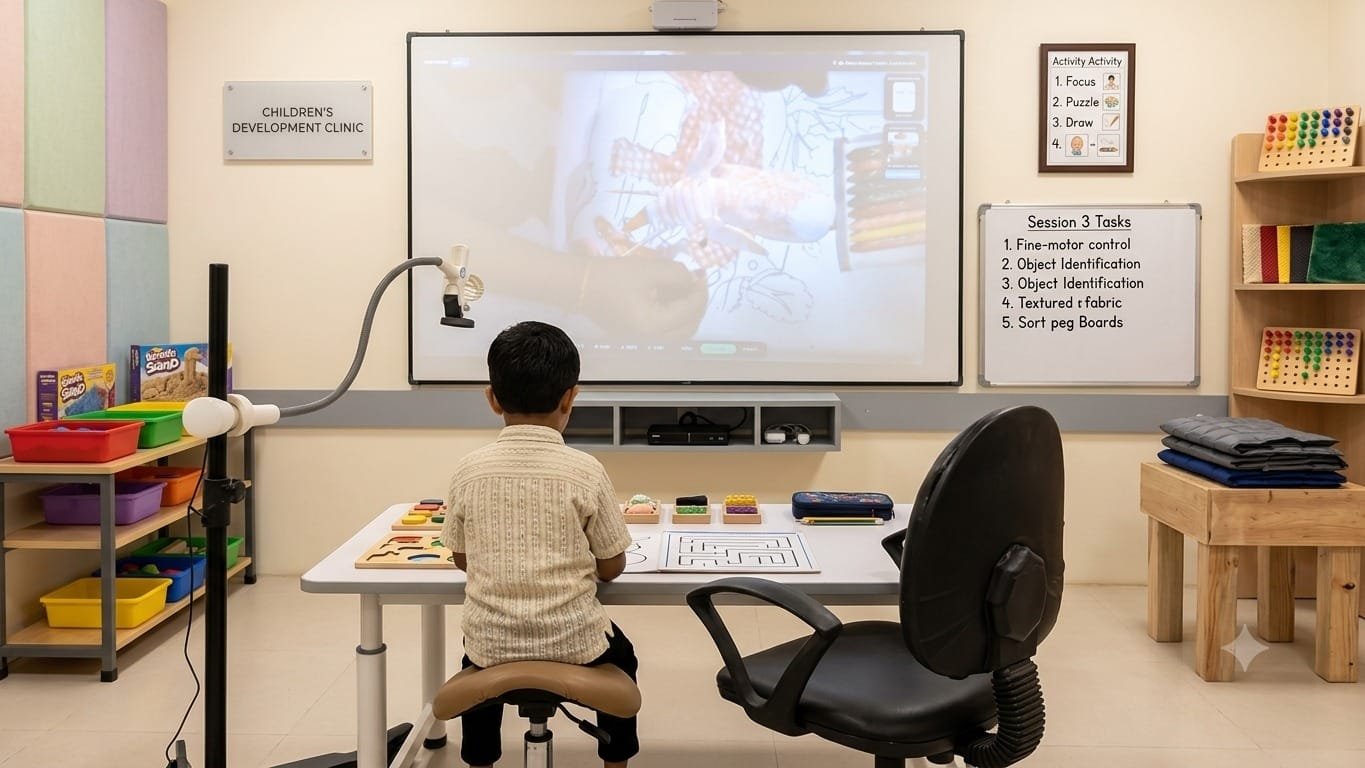
The same precision a worksheet asks for, with something happening when they get it right.
What it is
The child works within shapes and outlines, filling, tracing and following lines. The surface responds to where and how firmly they work, so staying inside a boundary or following a path produces an immediate visible result.
The movements are the ones that underpin handwriting: a controlled grip, graded pressure, and the ability to keep a hand moving along an intended path rather than drifting off it.
Why it holds attention
Pre-writing practice is where children disengage fastest, because worksheets give nothing back and mistakes are permanent and visible. Here a wrong line can be undone instantly, which lowers the stakes enough for a child to keep trying.
What the therapist controls
Shape complexity, line thickness, boundary tolerance and how much assistance the activity gives are adjustable. Begin forgiving, then tighten the tolerance as control improves.
What it works on
Grip strength
Sustained holding and controlled pressure through the hand.
Pencil control
Keeping a deliberate path rather than drifting.
Hand–eye coordination
Eyes guiding the hand continuously, not intermittently.
Pre-writing skills
The component movements handwriting is built from.
In the room
-
01
Seat the child properly
Table height and posture matter as much here as the activity itself.
-
02
Start inside their range
Begin with shapes they can complete, so the first result is a success.
-
03
Tighten the tolerance
Reduce boundary forgiveness as control improves within the session.
-
04
Keep the output
Completed work can be shown to the parent — concrete evidence of a good session.
Eight modules, one system
Most clinics start with the two that match their most common goals, and add more once the team is comfortable.