

Wall Projection
A vertical surface that answers touch and movement — drawing out reaching, stretching and extension that are hard to elicit on instruction alone.
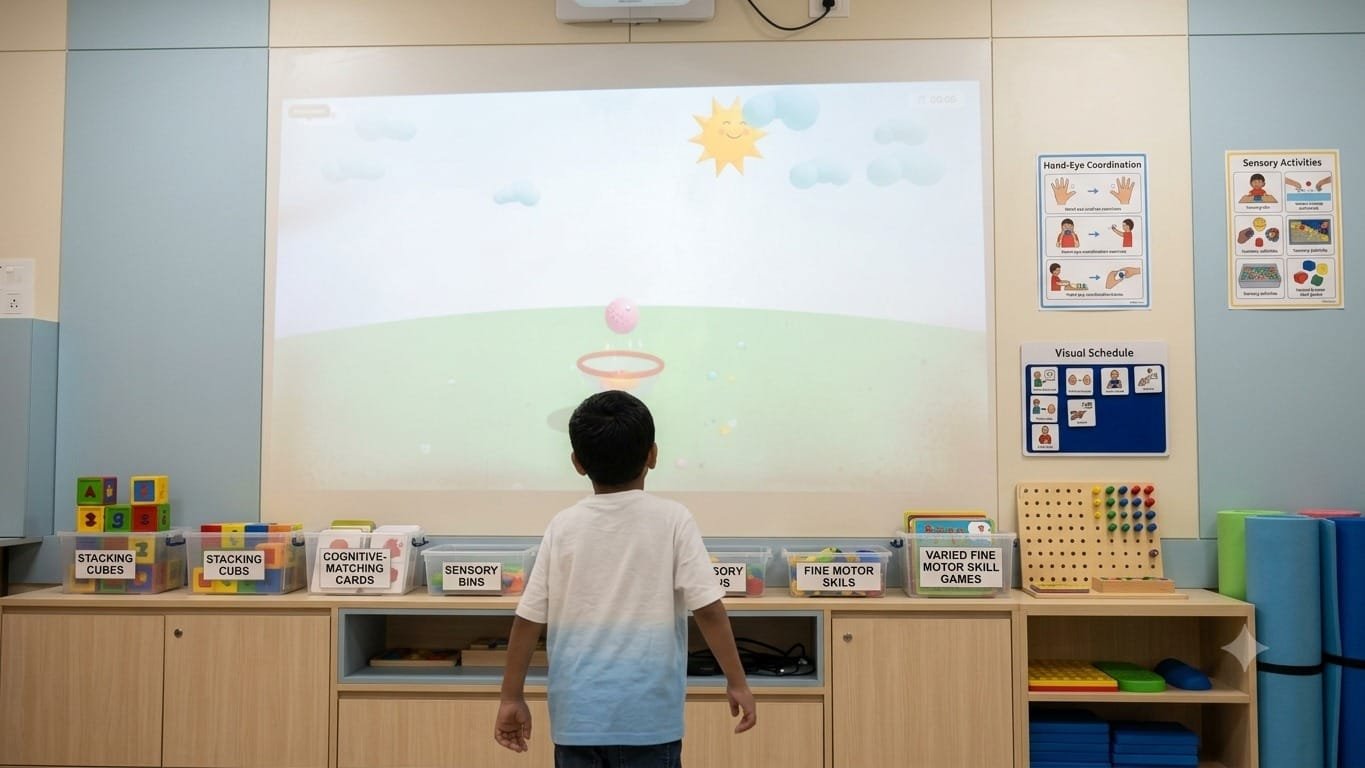
Targets placed high and wide produce extension that 'reach up for me' rarely does.
What it is
Games are projected onto a wall and the child interacts by reaching, tapping or swiping at what appears. Because the therapist chooses where targets appear, reach height, direction and range are set deliberately rather than left to chance.
This is the most direct way in the system to work on shoulder mobility and arm extension. A target placed just beyond comfortable reach produces a genuine stretch, and the child commits to it because they want to hit it.
Why it holds attention
Asking a child to reach as high as they can produces one half-hearted attempt. Putting something they want at that height produces dozens — and they will stretch further for a target than for a count.
What the therapist controls
Target height, spread, size, dwell time and speed are adjustable. Keep everything within easy reach to build confidence, then push the range out as the session progresses.
What it works on
Reaching & extension
Full arm extension toward deliberately placed targets.
Shoulder mobility
Range of motion through flexion and abduction, repeated willingly.
Hand–eye coordination
Locating a target visually and landing the hand on it.
Crossing midline
Targets placed to require reaching across the body.
In the room
-
01
Position the child
Standing or seated, far enough back that reaching is required rather than leaning.
-
02
Map the reach zone
Set target placement to the range you want to work in, including just beyond comfort.
-
03
Play and extend
Move the zone outward as the child warms up and tolerance improves.
-
04
Record the range
Attempts, accuracy and time on task are captured for the notes.
Eight modules, one system
Most clinics start with the two that match their most common goals, and add more once the team is comfortable.