

Vocal
Voice-responsive activities that encourage sound production, pacing and articulation — and prompt in the child's own language, not only English.
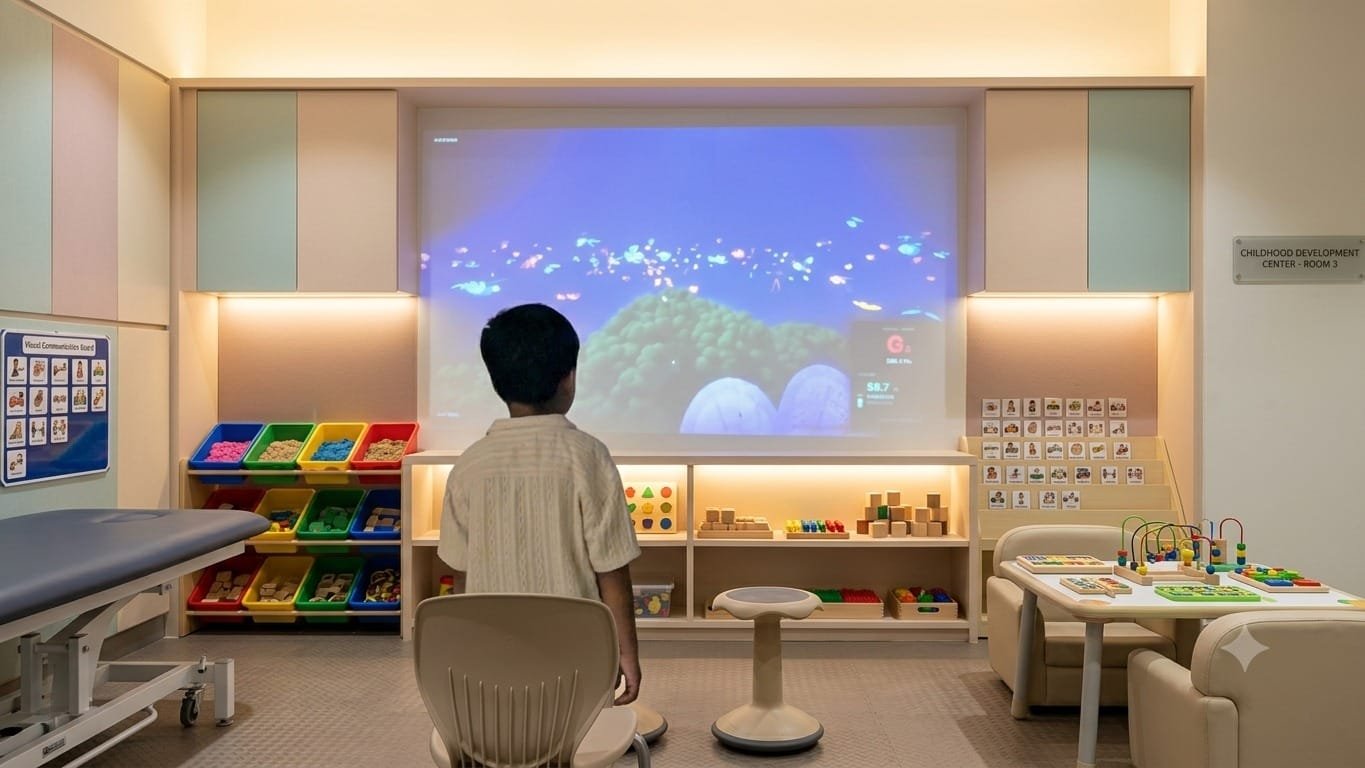
Prompting in the language spoken at home, not only in English.
What it is
The activity shows a picture and a word, and responds when the child produces the sound. Making a sound is the input — so the game only moves forward when the child speaks, which is a far stronger prompt than being asked to repeat after an adult.
Prompts can be presented in the child's own language. For families in Gujarat that means working in Gujarati rather than forcing early practice through English, which matters when the goal is production rather than vocabulary.
Why it holds attention
Articulation practice is repetitive by nature and children tire of being asked to say the same word again. When the word makes something happen on screen, the repetition stops feeling like testing.
What the therapist controls
Word lists, how long the child has to respond, and how forgiving the activity is about accuracy are adjustable, so the same module suits early sound production and later articulation refinement.
What it works on
Sound production
Producing a target sound, with an immediate result for doing so.
Pacing
Timing and rhythm of speech rather than single sounds in isolation.
Articulation practice
High repetition on target words without the fatigue of drilling.
Confidence to speak
Lower stakes than being corrected by an adult face to face.
In the room
-
01
Choose the word set
Select targets that match the child's current speech goals.
-
02
Set the tolerance
Decide how close the production must be — forgiving early, tighter later.
-
03
Play through the set
The child works through words with the therapist shaping as they go.
-
04
Review attempts
Attempts and accuracy per word are recorded for the notes.
Eight modules, one system
Most clinics start with the two that match their most common goals, and add more once the team is comfortable.