

Body Tracking
Motion sensing turns the child's whole body into the controller — coordination, range of motion and motor planning, with nothing to wear.
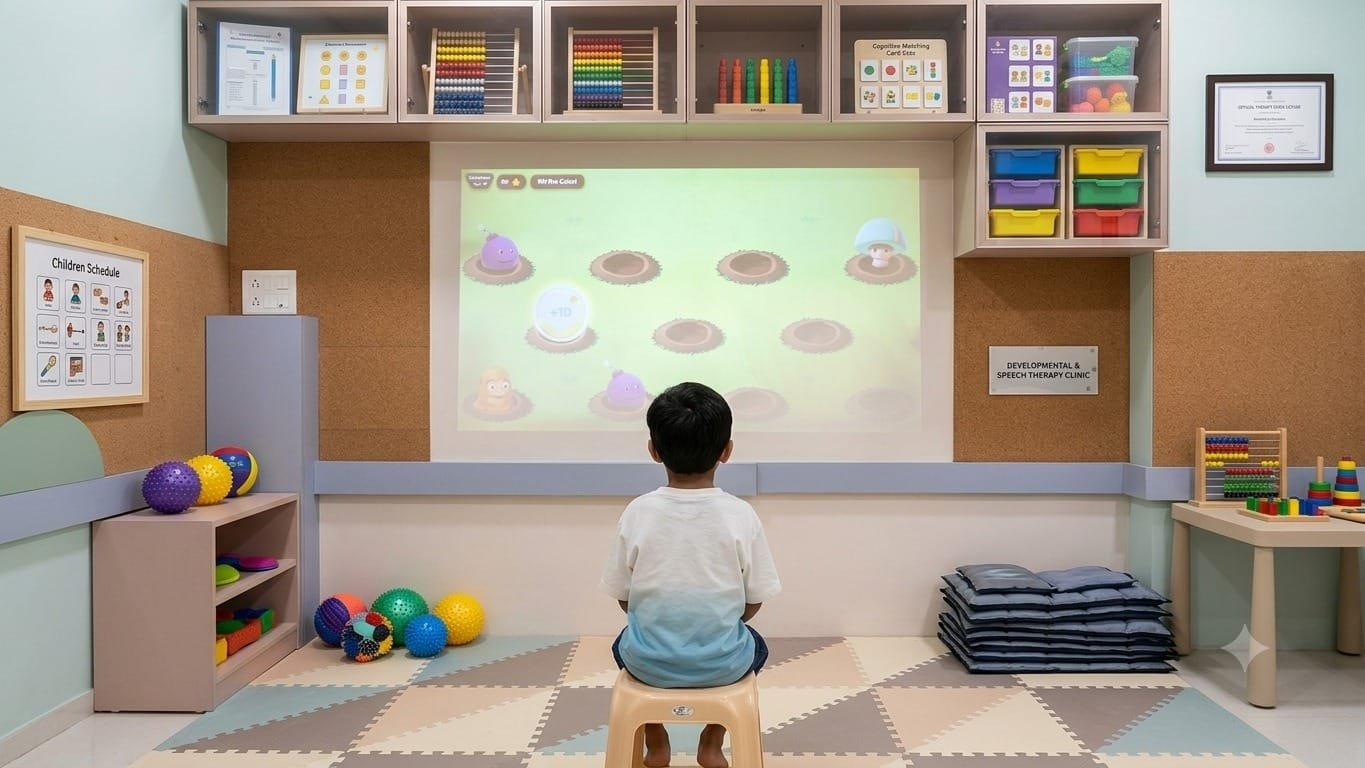
No markers, no straps, nothing clipped on. The camera simply watches how they move.
What it is
A camera reads the child's movement and the game responds to it. Raising an arm, leaning, squatting, stepping or holding a pose all become inputs, so a single activity can demand a sequence of different movements rather than one repeated action.
Nothing is worn or held. For children who will not tolerate straps, markers or handheld controllers — a common barrier in paediatric work — that removes the obstacle entirely.
Why it holds attention
Motor planning is difficult to practise deliberately, because the moment you break a movement down and narrate it you have removed the planning. A game that asks for a sequence puts the planning back: the child has to work out what to do before doing it.
What the therapist controls
Which movements the game asks for, how long poses must be held, and how quickly sequences arrive are all adjustable. Start with single clear movements and build toward sequences.
What it works on
Coordination
Limbs working together toward a single goal.
Range of motion
Larger, fuller movements than a child self-selects.
Motor planning
Working out a movement before executing it.
Imitation & following
Copying a modelled movement shown on screen.
In the room
-
01
Set the capture area
The child stands in view of the sensor with room to move in all directions.
-
02
Choose the movement set
Pick the movements the game will ask for, matched to the session goal.
-
03
Play and sequence
Progress from single movements to short sequences as the child succeeds.
-
04
Review the session
Attempts, accuracy and time on task are captured automatically.
Eight modules, one system
Most clinics start with the two that match their most common goals, and add more once the team is comfortable.