
WHAT IS IT?
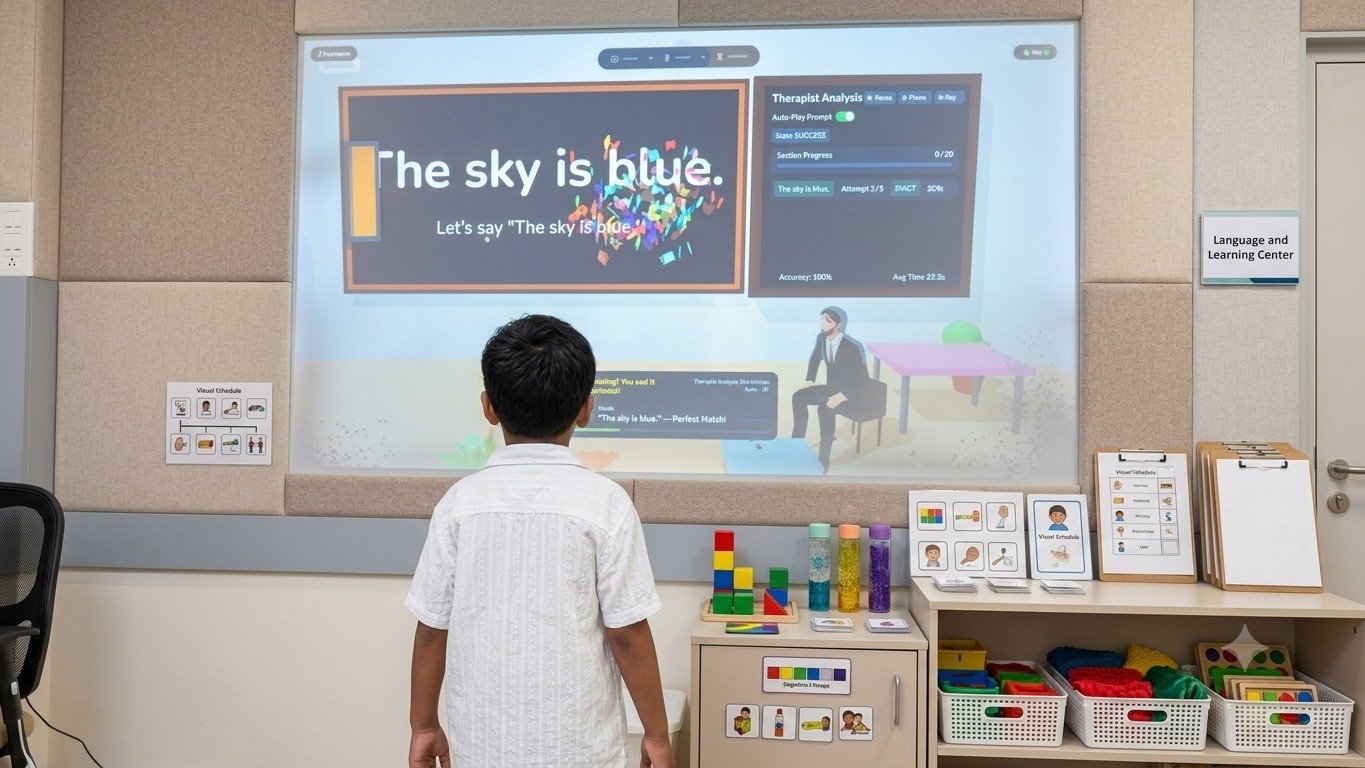
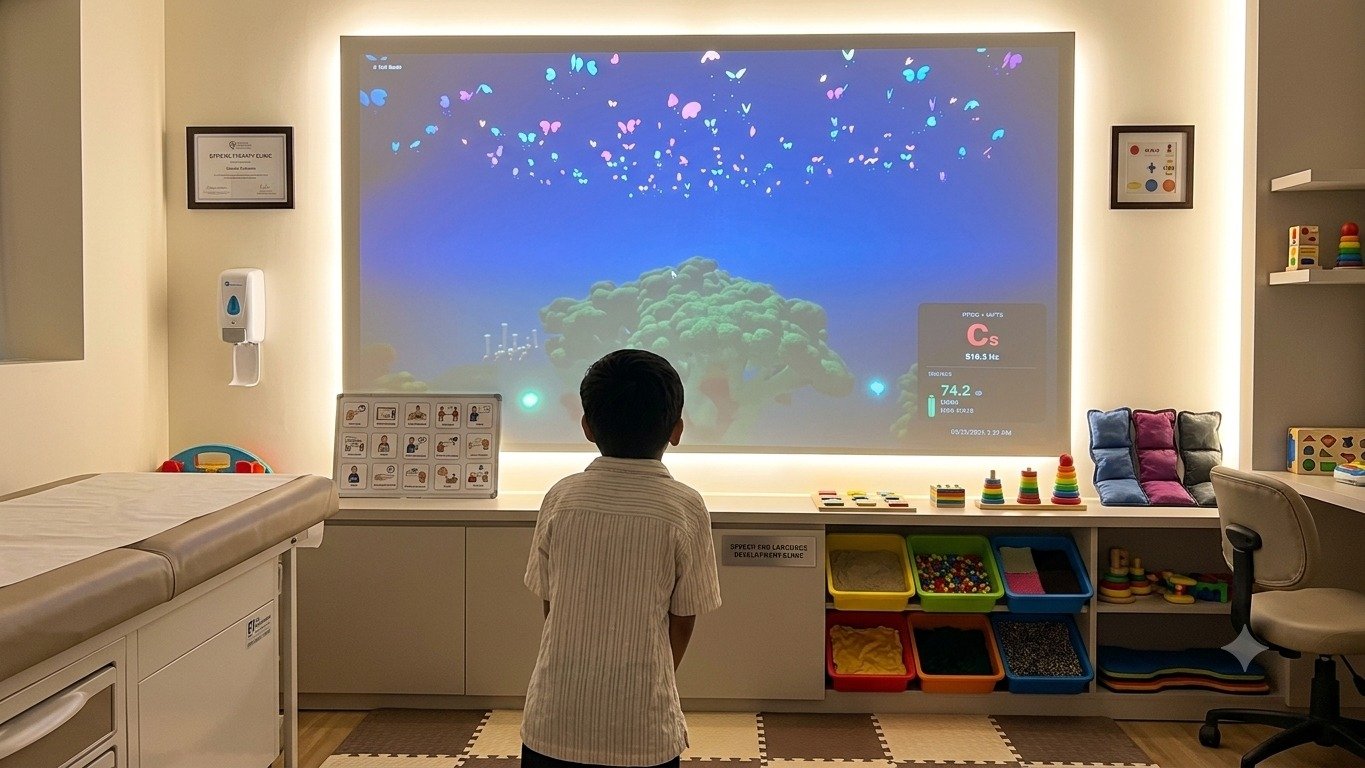
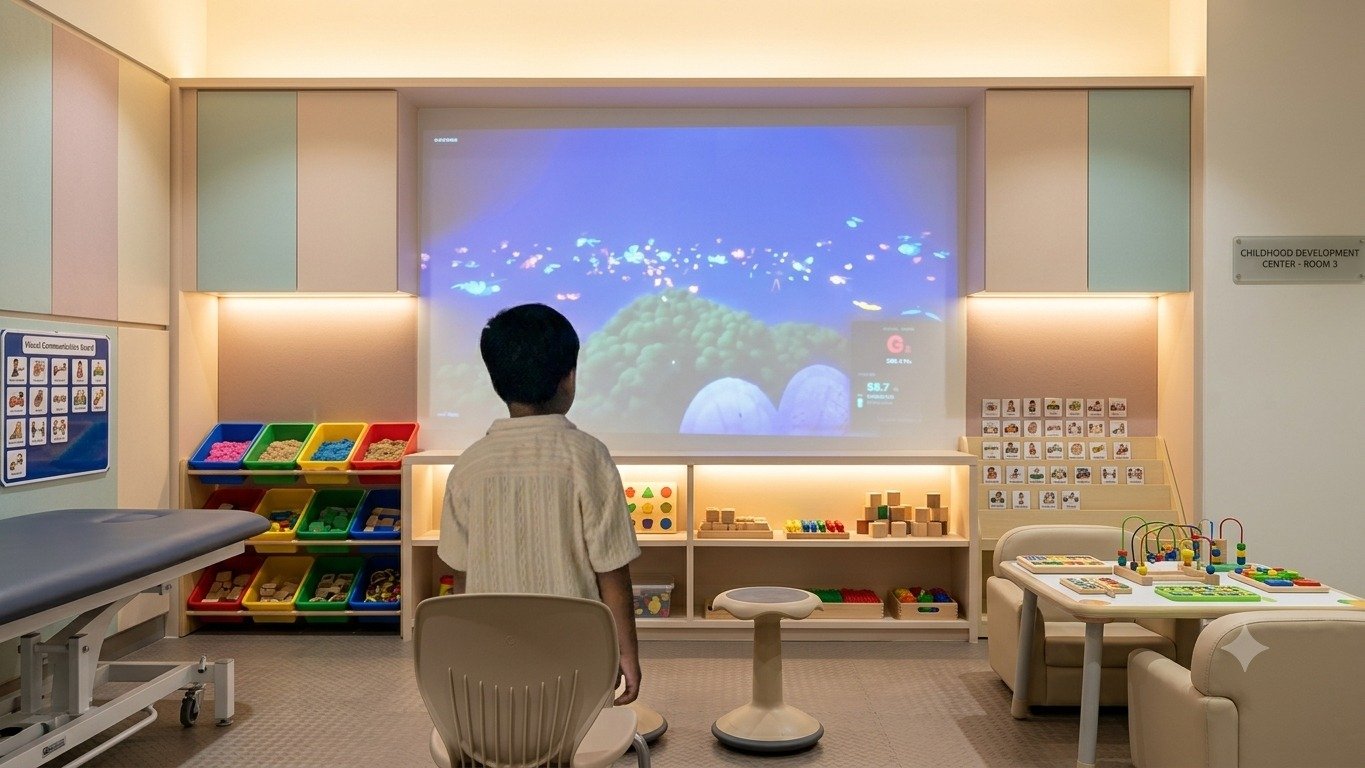
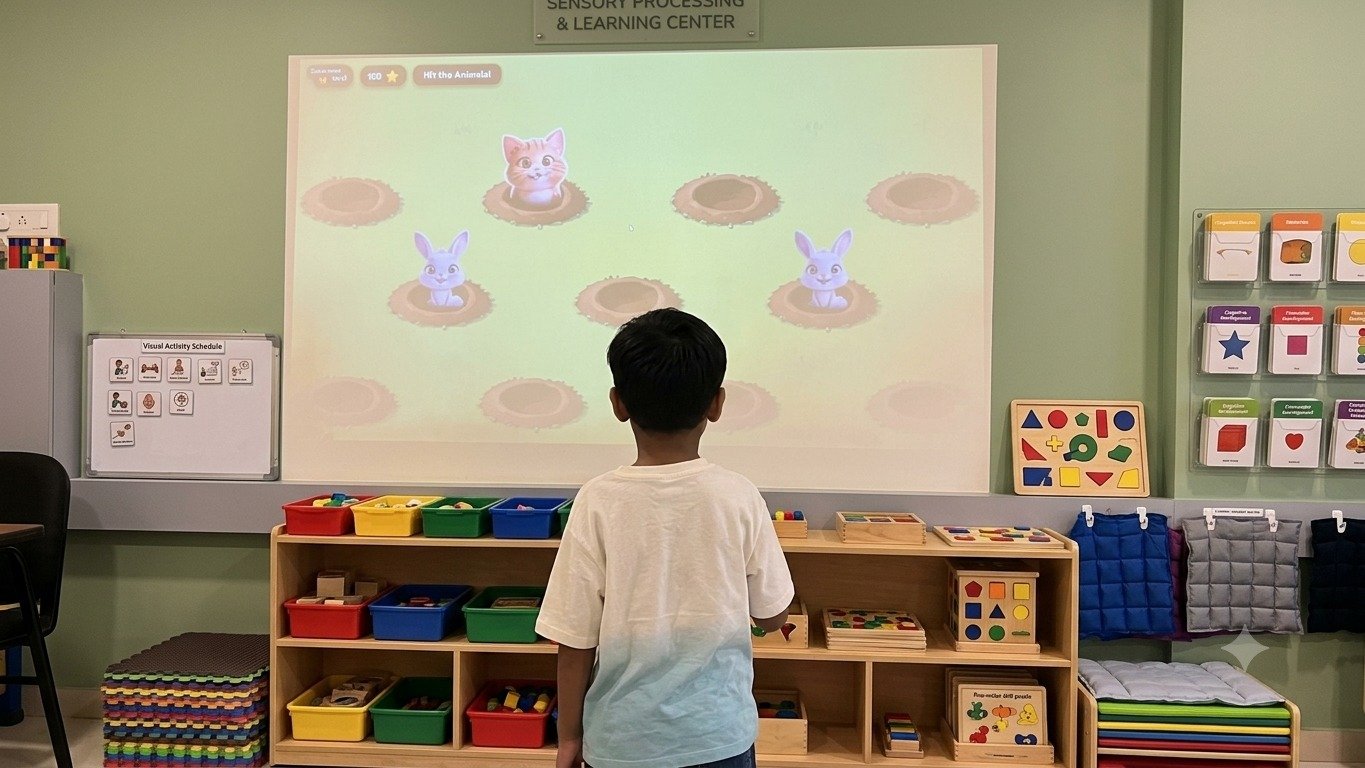
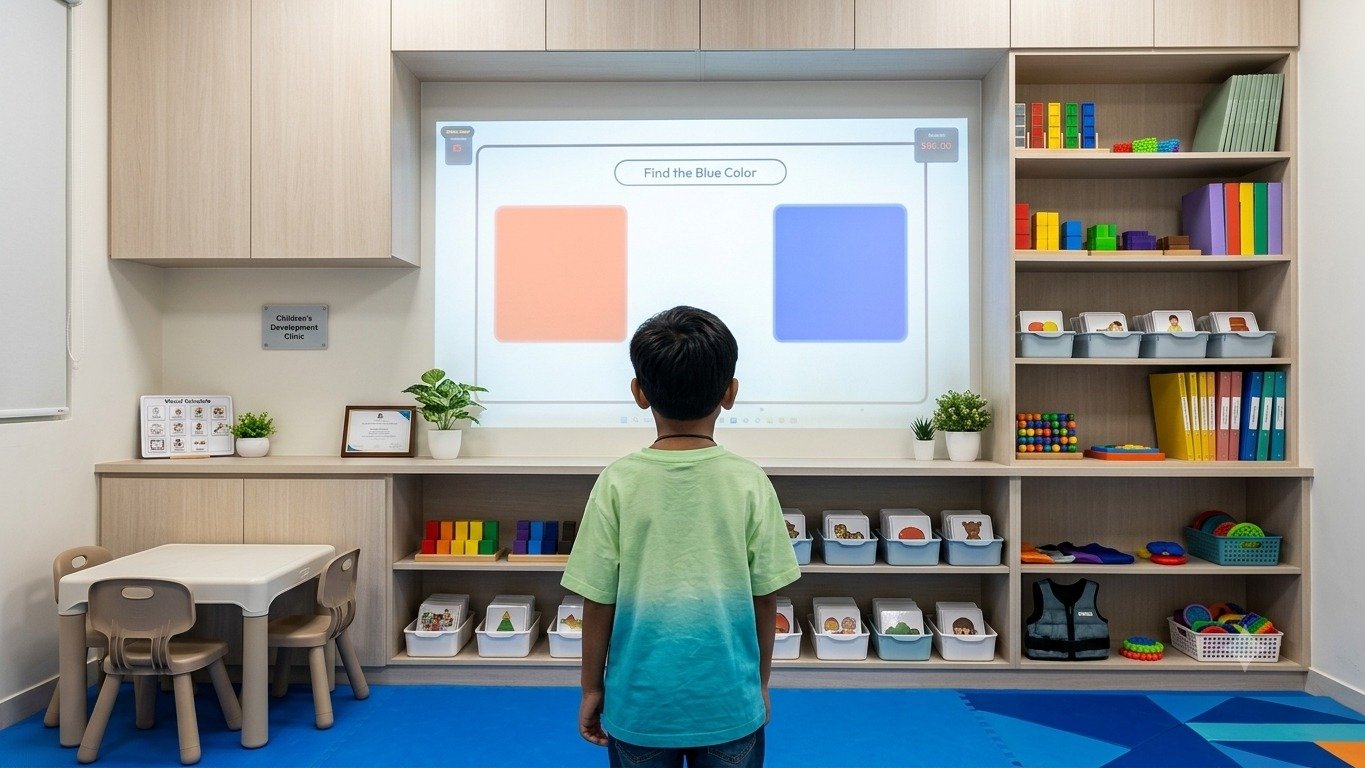
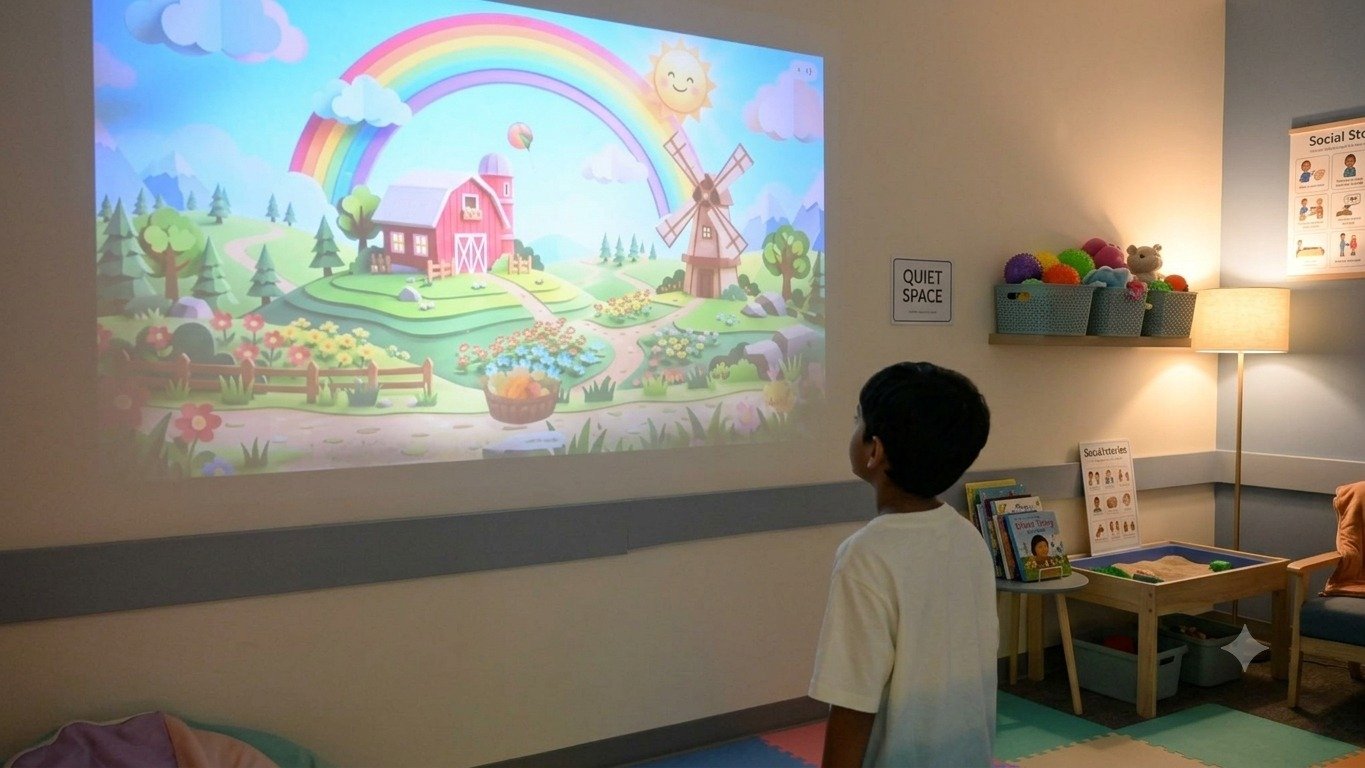
● Aprojector displays interactive activities on a wall surface at various heights
● Camera tracks the child's hand and body movements in real-time against the projected surface
● Activities require reaching, touching specific targets, and responding to visual-auditory cues on the wall
● Covers both upper body (arms, shoulders, trunk) and lower body (stepping, squatting to reach lower targets)
● Multiple difficulty levels from simple single-target touch to complex multi-target sequential activities
● Offers assistive audio cues for blind and partially-sighted children — spoken direction supplements reach height and target side, with an OT/PTprofessional supervising throughout
WHY IS IT USEFUL?
● Upper limb spasticity and limited range of motion is one of the most common challenges for CP children — wall reaching activities are a clinically proven method to expand range of motion
● Autism children often have limited purposeful arm movement; activity-motivated reaching encourages full arm extension voluntarily
● Wall projection activities combine visual tracking, motor response and auditory instruction simultaneously — multisensory engagement
THERAPEUTIC BENEFITS — EVIDENCE BASED
● Interacve, video-based movement therapy is documented as a safe, enjoyable and feasible strategy to increase movement experiences in children with developmental disabilies [31]
● Repeve, acvity-movated limb movements are associated with neuroplasc changes supporng motor cortex development in CP children [31][32]
● Mul-sensory acvity environments — visual, auditory, propriocepve — are associated with improved motor learning compared with unimodal approaches [32]
● Children who engage voluntarily in movement tend to show beer therapy outcomes than those performing passive exercises alone [32]